

Women’s Psychiatry & Mental Wellness
A woman’s highest risk of suicide is during perimenopause. A woman with premenstrual dysphoric disorder (PMDD) is 7x more likely to attempt suicide than a woman without. Twenty seven percent (27%) of women enter pregnancy with depression while 40% will develop depression postpartum. Up to 80% of perimenopausal women experience depression, anxiety, and or panic while only 1-7% of perimenopausal or menopausal women receive treatment for their symptoms.
Due to her distinct biological differences, high rates of trauma, caregiving and social pressures, a woman is burdened with higher rates of depression, anxiety, and PTSD than her biological male peers. Treatment improves her well-being, physical health, mental health, workplace productivity, financial strength, and family stability.
PMDD
Premenstrual dysphoric disorder (PMDD) is a poorly understood condition that causes 3-8% of women to go through a special type of hell during the last 5-14 days of her menstrual cycle. Symptoms include:

rage, irritability, mood swings, crying
depression, despair, hopelessness, self-harm, suicidal ideation or suicide attempt
anxiety, poor focus, insecurity, panic attacks
fatigue, bloating, poor sleep, migraines, breast swelling, joint or muscle pain
As only 10% of providers feel comfortable treating this condition, the average length of time to a diagnosis and treatment is 12 years. Significant improvements can be made by reducing total daily sugar intake to ~25 grams, eating whole foods or following a traditional eating pattern like the Mediterranean diet, and regular exercise. If indicated, various botanicals, micronutrients, and prescription medications can effectively treat PMDD for most women suffering from the condition.
Menopause & Perimenopause
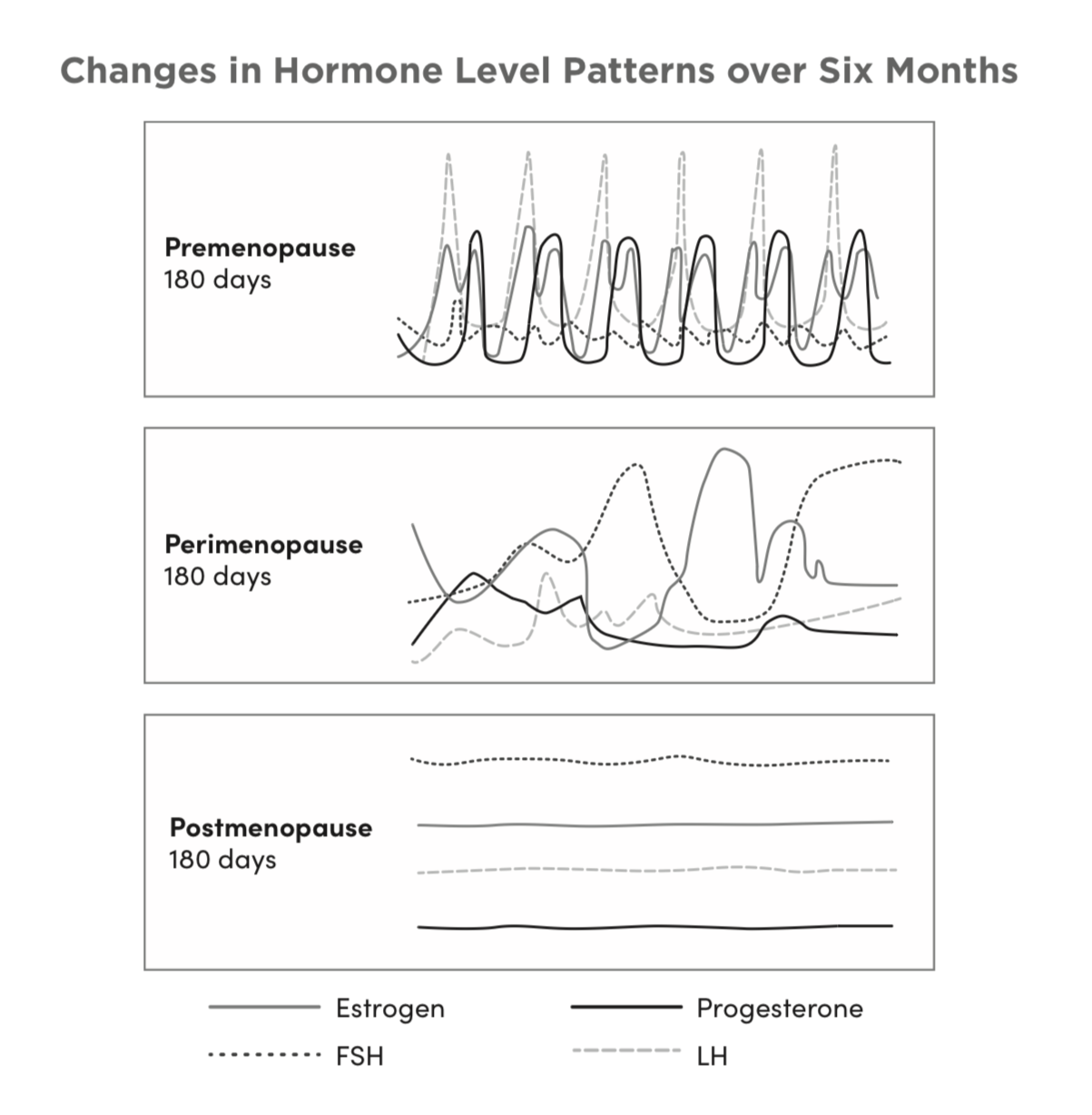
Harvard Women’s Health Watch, 1999. Cited in The New Menopause, by Dr. Mary Claire Haver MD
Often gas-lit and untreated, the perimenopausal woman wanders the second half of her life, burdened by a mix of the oddest symptoms: waking between 2:00 - 4:00 am, itchy ears, neuropathy, brain fog that makes her worry she has Alzheimer’s, a metallic taste in her mouth, frozen shoulder or new joint pain, high cholesterol but no change in diet, smelly feet, dry eyes, peeing just a bit when she laughs or sneezes, weight changes but no change in behaviors, vaginal dryness, fatigue, or tactile hallucinations. Alarmed and tired, she tries to get help, hoping she can feel even a little bit like herself again. The answers she receives from healthcare providers range from shrugged shoulders, to lab orders, to referrals, or maybe, comments about aging. No one tells her that the hormones that naturally decline as we age (estrogen primarily, but progesterone and testosterone as well) impact nearly every system in a woman’s body, and as those levels drop, it begins to feel like the person in charge started making decisions by flipping a coin.
Hormone replacement therapy (HRT), also called PET Treatment for progesterone, estrogen, and testosterone therapy or menopausal hormone therapy (MHT), is a highly effective treatment for symptoms of menopause and perimenopause. The risks of HRT for most women are very low, especially if treatment is started early and other healthy habits are practiced. Despite this, a variety of myths persist regarding HRT and keep the number of women experiencing relief abysmally low.
Often women will be told that what they are experiencing is not perimenopause because they are “too young.” Many women begin to experience perimenopause as early as age 35 following a well-documented and expected decline in estrogen.
“You don’t have perimenopause because you don’t have night sweats or hot flashes.” Vasomotor symptoms may not show up until mid or late perimenopause, coming and going due to fluctuating hormone levels. When estrogen first starts to decline, early symptoms often include changes in energy, sleep, menstruation, and mood. Fortunately, these symptoms are very responsive to HRT.
“HRT is not safe.” Back in 2002 a media briefing on a large study called The Women's Health Initiative (WHI) set off a major public and scientific misunderstanding of hormone replacement therapy. Headlines claimed HRT universally caused breast cancer, heart attacks, and strokes, ignoring that study participants were much older than women typically started on HRT, had more comorbidities, and were prescribed less common, synthetic hormone formulations. The confusion created by the WHI study is now widely referred to as "The Study That Set Women’s Health Back 20 Years." Finally, we are seeing course corrections to this misinformation. Data has demonstrated HRT is among some of the lowest risk and most beneficial treatments available.
“Your labs are fine.” While hormone levels typically ebb and flow at expected levels prior to perimenopause, hormone levels become erratic after age 35. Estrogen levels can shoot from supraphysiologic one day to barely detectable the next. Though labs are useful and recommended in the treatment of perimenopause and menopause, the decision to start HRT is based on symptoms, not on labs.
“You have to be done with menopause to start HRT.” Early intervention with HRT - especially bioidentical HRT - can reduce a woman’s risk of dementia, cardiovascular disease, cancer, osteoporosis and bone fracture, muscle loss, diabetes and metabolic conditions, urological problems, and death. HRT is also highly correlated with improved sleep, stable moods, less depression and anxiety, sexual satisfaction, improved energy, weight management, and confidence. Recommending that a woman wait to start HRT until she is done with menopause is about as useful as telling someone to start investing in their retirement once they have stopped working.
“If you’re menstruating, you shouldn’t be given estrogen.” It seems logical. She is menstruating every four weeks. She does not have hot flashes. A lab showed high levels of estrogen. So why would prescribing estradiol, one of the common prescriptions used in HRT, be indicated? A continuous supply of estradiol stabilizes hormone fluctuations and the symptoms that follow.
“Women don’t need testosterone!” Or, “Its going to give you masculine features.” Testosterone is the most abundant hormone in a woman’s body, we actually have more testosterone than estrogen. Testosterone at physiologic levels can support metabolism, energy, libido, sleep, cognition, muscle tissue, and mood. I strongly recommend keeping the level within a physiologic range to avoid adverse effects.
What This Clinic Offers
To save you time, please note that our clinic offers many HRT treatments, but not all.
We offer:
oral, vaginal, and transdermal forms of estrogens, compounded estrogen formulations
bioidentical progesterone, immediate release (paid for by insurance), sustained release, compounded,
transdermal testosterone, compounded transdermal creams
We do not offer:
testosterone pellet injections